SPEAKERS
THE PEOPLE BEHIND THE SCIENCE

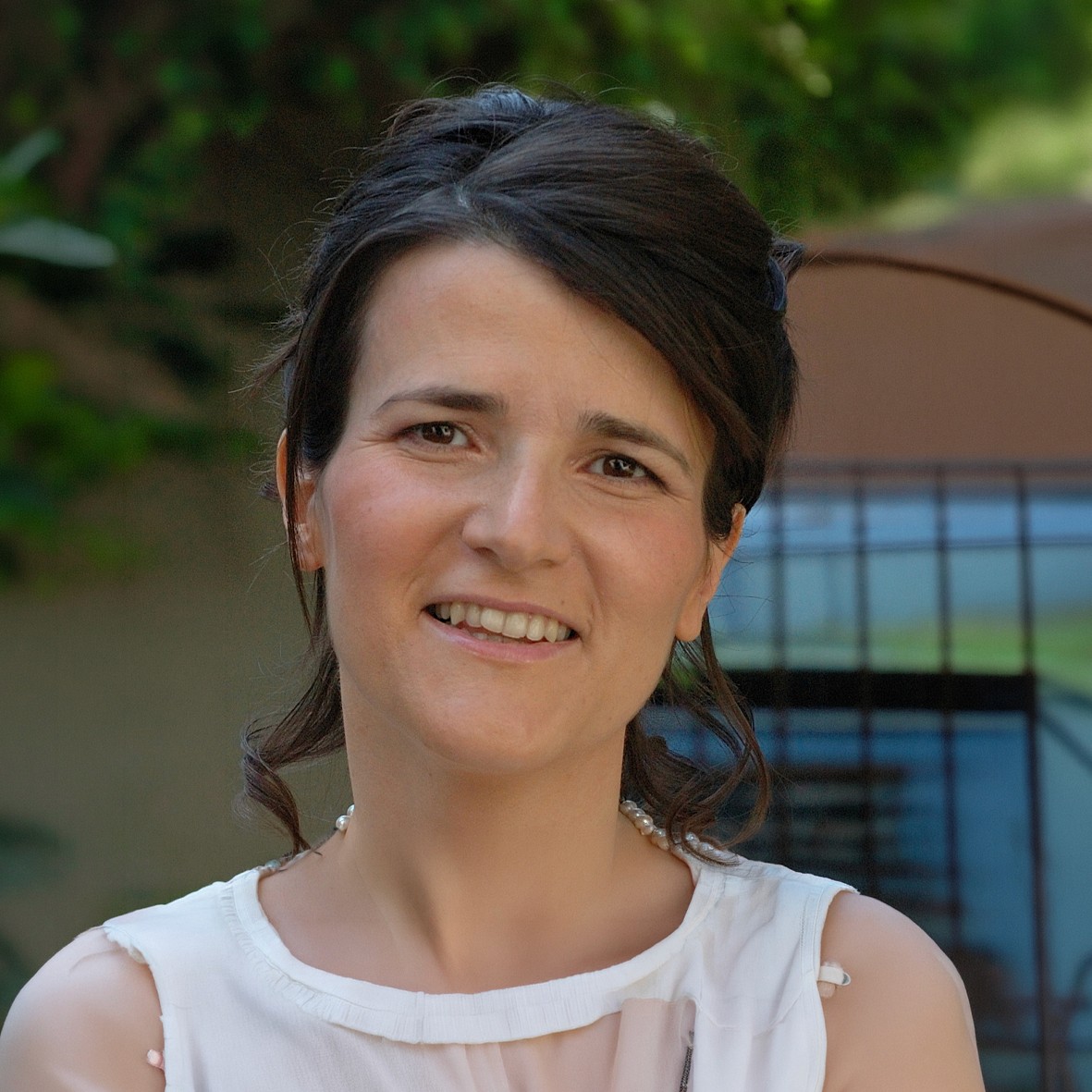
Prof. Maria Prandini
IFAC President-elect,
Politecnico di Milano
“Multi-agent optimization under uncertainty: probabilistic robustness in a data-based privacy preserving framework”
Abstract:
We consider multi-agent optimization problems over networks, where agents cooperate to reach agreement on a common decision or on the share of a common resource.
We investigate the setting where the environment within which agents operate is uncertain, each agent has access to a finite amount of data on the uncertain phenomenon, and these data constitute a private resource that is not to be exchanged or shared among agents. We provide a data driven framework to address these problems, and show how to accompany decisions in such a private-data regime with probabilistic certificates of robustness using tools from the so called scenario approach. Moreover, we discuss how such decisions can be computed in a distributed manner. To this end, we presented a general distributed architecture as a multi-agent information exchange mechanism, and illustrated it by outlining specific algorithms to solve decision and constraint couple optimization problems.
Short Bio:
Maria Prandini is currently full professor in Automatic Control at Politecnico di Milano, Italy.
She has been contributing to the activities of the IEEE Control Systems Society (CSS), the International Federation of Automatic Control (IFAC), and the Association for Computing Machinery (ACM) in different roles. She is currently IFAC President-elect. Previously, she was Vice-President for conference activities for IFAC (2020-23) and IEEE CSS (2016 and 2017), and a member of SIGBED Board of Directors (2019-21).
She was elected Fellow of the IEEE in 2020 and received the IEEE CSS Distinguished Member award in 2018. In 2017, she was August-Wilhelm Scheer Visiting Professor and Honorary fellow of the TUM Institute for Advanced Studied. She was conferred the title of Visiting Professor in Engineering at the University of Oxford for the triennia 2022-2025 and 2025-2028.
Her research interests include stochastic hybrid systems, distributed and data-driven optimization, federated learning in multi-agent systems, and the application of control theory to transportation and energy systems.

Keenan Albee
University of Southern California
“Autonomy On-Orbit and Beyond: Expanding Mission Capabilities in Extreme Environment Robotics”
Abstract:
Autonomy is essential to making rapid decisions in safety-critical situations and dealing with tasks too complex for a human teleoperator. Within the space robotics community, the confluence of enhanced processing power, algorithmic maturity, and growing acceptance of autonomy in risk-averse domains is leading to a renaissance in its use. This talk explores some of the enduring algorithmic and safety challenges of working with increasing complexity in space and extreme environment robotics autonomy; in particular, the problem of motion planning and control under uncertainty will be explored in the context of providing robot motion that is safe, real-time, and tailored to the needs of real robotic systems. This work is framed in the context of novel planning and control techniques in microgravity close proximity operations and planetary surface robotics, demonstrating, respectively, 1) planning, control, and state estimation for autonomous on-orbit rendezvous with an uncharacterized tumbling target; and 2) highly-constrained model predictive control for roving in unknown environments. Flight demonstrations of these techniques will be discussed for the Astrobee free-flyers aboard the International Space Station (ISS), and the Cooperative Autonomous Distributed Robotic Explorer (CADRE) rovers launching to the Moon.
Short Bio:
Keenan Albee is an Assistant Professor in the Department of Astronautical Engineering at the University of Southern California, with a courtesy appointment in Aerospace and Mechanical Engineering. He is the Principal Investigator of the Laboratory for Autonomous Systems in Exploration and Robotics (LASER), where he leads research on autonomous robotic systems for extreme and uncertain environments.
He received his Ph.D. in Aeronautics and Astronautics from the Massachusetts Institute of Technology in 2022, specializing in autonomous systems, with a minor in numerical methods. His doctoral research focused on online, information-aware motion planning and model improvement for uncertain mobile robotics. He also earned an S.M. in Aeronautics and Astronautics from MIT in 2019. He completed his undergraduate studies at Columbia University, where he received a B.S. in Mechanical Engineering in 2017, with minors in Computer Science and History.
From 2022 to 2025, he worked at NASA’s Jet Propulsion Laboratory as a Robotics Technologist in the Maritime and Multi-Agent Autonomy group. In this role, he served on the guidance, navigation, control, and autonomy teams for the CADRE lunar technology demonstration mission, developing and validating distributed multi-agent autonomy, real-time optimization-based motion planning, and coordination algorithms for fully autonomous lunar rovers. His work contributed to the first deployment of trajectory optimization techniques on another celestial body.
His research interests lie in autonomous robotics for extreme environments, planning and control under uncertainty, and multi-agent coordination. His work emphasizes safety-aware, resource-constrained autonomy and the integration of learning-based methods with optimal control and trajectory optimization, with applications spanning on-orbit servicing, planetary exploration, and advanced aerospace robotic systems. .

Giacomo Casadei
Universitè Grenoble Alpes
“Synchronization problems in networks of homogeneous and heterogeneous systems”
Abstract:
This presentation/module addresses the problem of synchronization in networks of dynamical systems, distinguishing between the case of homogeneous agents and that of heterogeneous agents, with particular emphasis on the role of control design and on the bounds that can be guaranteed on the synchronization error.
In the first part, the homogeneous case, where all systems share the same local dynamics, is analyzed. Synchronization is achieved through distributed control strategies based on Riccati theory, both in continuous-time and discrete-time settings. Stability conditions and convergence properties of the synchronization error are discussed, highlighting the relationship between the solution of the Riccati equation and the structure of the interconnection network.
The second part is devoted to the heterogeneous case, in which the nodes exhibit different dynamics. In an initial step, a solution based on the internal model principle is introduced, aimed at guaranteeing asymptotic synchronization despite the heterogeneity. Subsequently, a diffusive coupling, as the one designed for the homogeneous case, is considered: we analyze this setting in order to determine how much heterogeneity can be accepted while keeping the synchronization error bounded. This approach makes it possible to characterize a trade-off between control simplicity and performance in the presence of dynamical inequalities among the agents.
Short Bio:
Giacomo Casadei is an associate professor in Universitè Grenoble Alpes (IUT) and a member of team DANCE in GIPSA-Lab since 2024. He received the Master degree in Automation in 2012 and the Phd degree in Automation and Operative Research in 2016 at the University of Bologna, Italy. From 2016 to 2018, he has been postdoc in the NeCS team, a joint team of GIPSALab (CNRS) and INRIA. From 2018 to 2024, he has held an associate professor position in Ecole Centrale de Lyon. His research interests include modeling and control of networks, with a particular focus on synchronization of nonlinear systems and the use of nonlinear control techniques in networks.
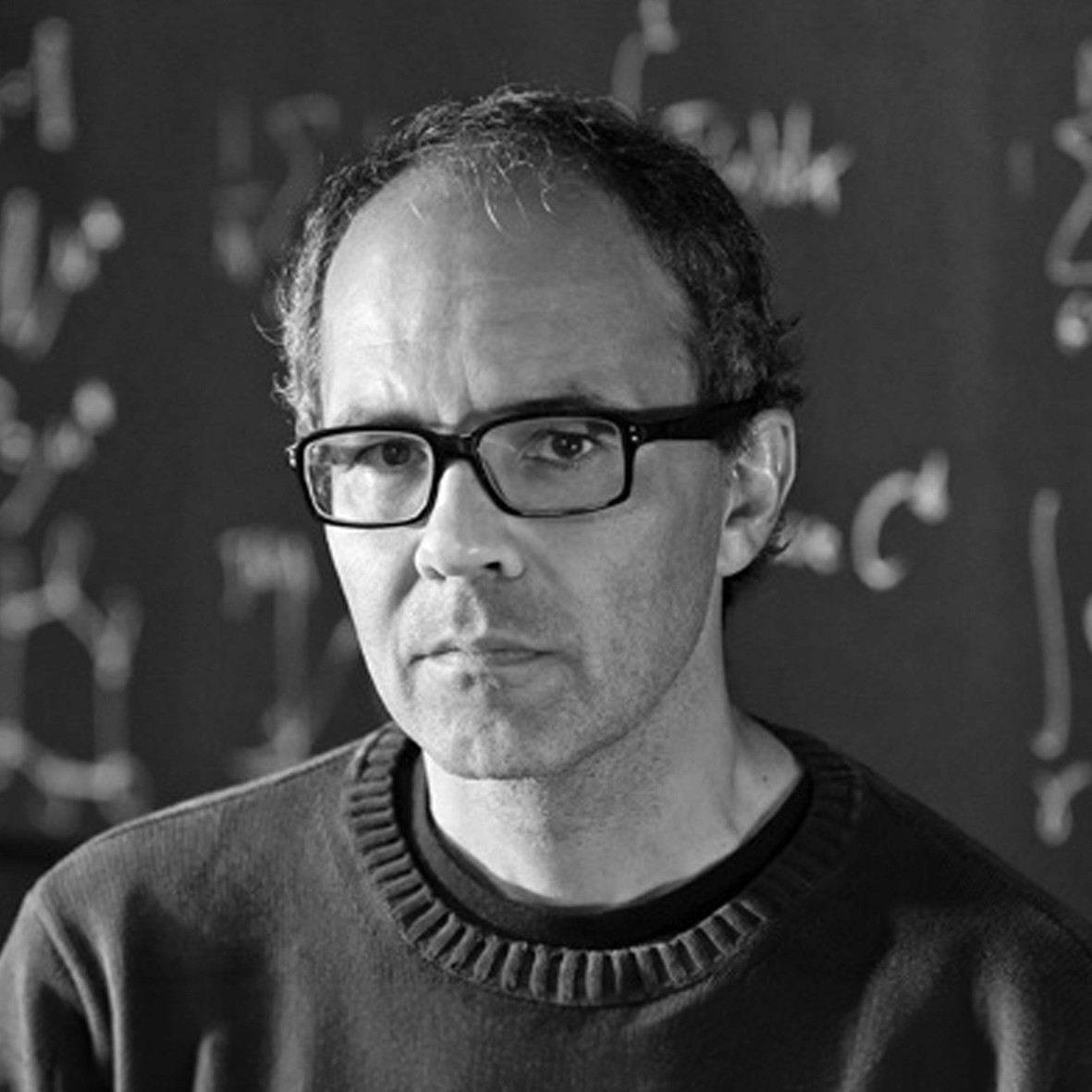
Fabio Fagnani
Politecnico di Torino
“Networks and games: equilibrium analysis, strategic learning dynamics, intervention design, and formation models”
Abstract:
Many socio-technical systems involve large numbers of agents acting strategically and in a competitive way, their decisions being affected by those of the others through patterns of dependencies that reflect social, economic, or infrastructural network topologies. Network games have emerged as a powerful framework for the formal analysis of such interactions by providing a model for settings where a large number of agents interact with each other according to an underlying network represented by a graph. In this lecture, we will review the main concepts and results on network games, focusing on the structure of their equilibria, the behavior of strategic learning dynamics, and the design of interventions aimed at modifying their outcomes. We will also discuss some recent game-theoretic models of network formation.
Short Bio:
Fabio Fagnani got his Laurea degree in Mathematics from the University of Pisa and Scuola Normale Superiore of Pisa in 1986 and the PhD in Mathematics from the University of Groningen in 1991. He has been Assistant Professor of Mathematical Analysis at the Scuola Normale Superiore during 1991-1998, and in 1997 he held a Visiting Professor position at MIT. Since 1998 he is with the Politecnico of Torino where he is currently (since 2002) Full Professor of Mathematical Analysis. In the period 2012-2019, he has been the head of the Department of Mathematical Sciences of Politecnico di Torino. His current research interests are on the broad topic of dynamics and control over networks: opinion dynamics, inferential distributed algorithms, epidemic models, network games and learning dynamics in games, social and economic applications. He has published over 70 refereed papers on international journals and 60 over peer-reviewed conference proceedings.
In 2017 he was the recipient of the Petar Kokotovic distinguished professorship from the University of California at Santa Barbara (UCSB). In 2019-2020 he got a Leverhulme visiting professorship at Royal Holloway University of London.

Sophie Fosson
Politecnico di Torino
“Secure state estimation of cyber-physical systems under sparse attacks”
Abstract:
A cyber-physical system (CPS) is a multi-agent system in which agents interact with the physical world through sensors and actuators, and with one another through communication networks. Representative applications of CPSs include industrial control systems, smart power grids, wireless sensor networks, autonomous ground vehicles, and cooperative driving technologies. The distributed nature of CPSs presents both advantages and challenges from a security perspective. On the one hand, distribution enhances resilience to faults compared to centralized architectures. On the other hand, it increases exposure to adversarial actions, either through physical access to sensors or cyber access to communication networks.
As a result, substantial research effort has been devoted to CPS security. A prominent line of work focuses on secure state estimation in the presence of sensor attacks, where adversaries inject false data to manipulate system measurements. In realistic scenarios, such attacks are assumed to be unpredictable: no information is available about their dynamics, bounds, or probabilistic characteristics. The primary and widely accepted assumption is sparsity, meaning that only a limited number of sensors can be compromised, due to factors such as high system dimensionality, physical deployment constraints, and sensor heterogeneity.
In this talk, we review the main approaches and results in secure state estimation for CPSs under sparse sensor attacks. Assuming a linear time-invariant model, we investigate system observability and illustrate how sparsity can be leveraged to restore state reconstructability in the presence of compromised sensors.
Short Bio:
Sophie Fosson received the M.Sc. degree in applied mathematics from Politecnico di Torino, Turin, Italy, in 2005, and the Ph.D. degree in mathematics for industrial technologies from Scuola Normale Superiore di Pisa, Pisa, Italy, in 2011. From 2012 to 2016, she was a Postdoctoral Associate with the Department of Electronics and Telecommunications, Politecnico di Torino. During the same period, she made several research visits to the Centre Tecnològic de Telecomunicacions de Catalunya (CTTC), Barcelona, Spain. In 2017, she was a Researcher at Istituto Superiore Mario Boella, Turin, Italy.
She then joined the Department of Control and Computer Engineering, Politecnico di Torino, where she is currently an Associate Professor. Her research interests include sparse optimization, machine learning, system identification, control, and cyber-physical systems. She is an Associate Editor of IEEE Control Systems Letters.
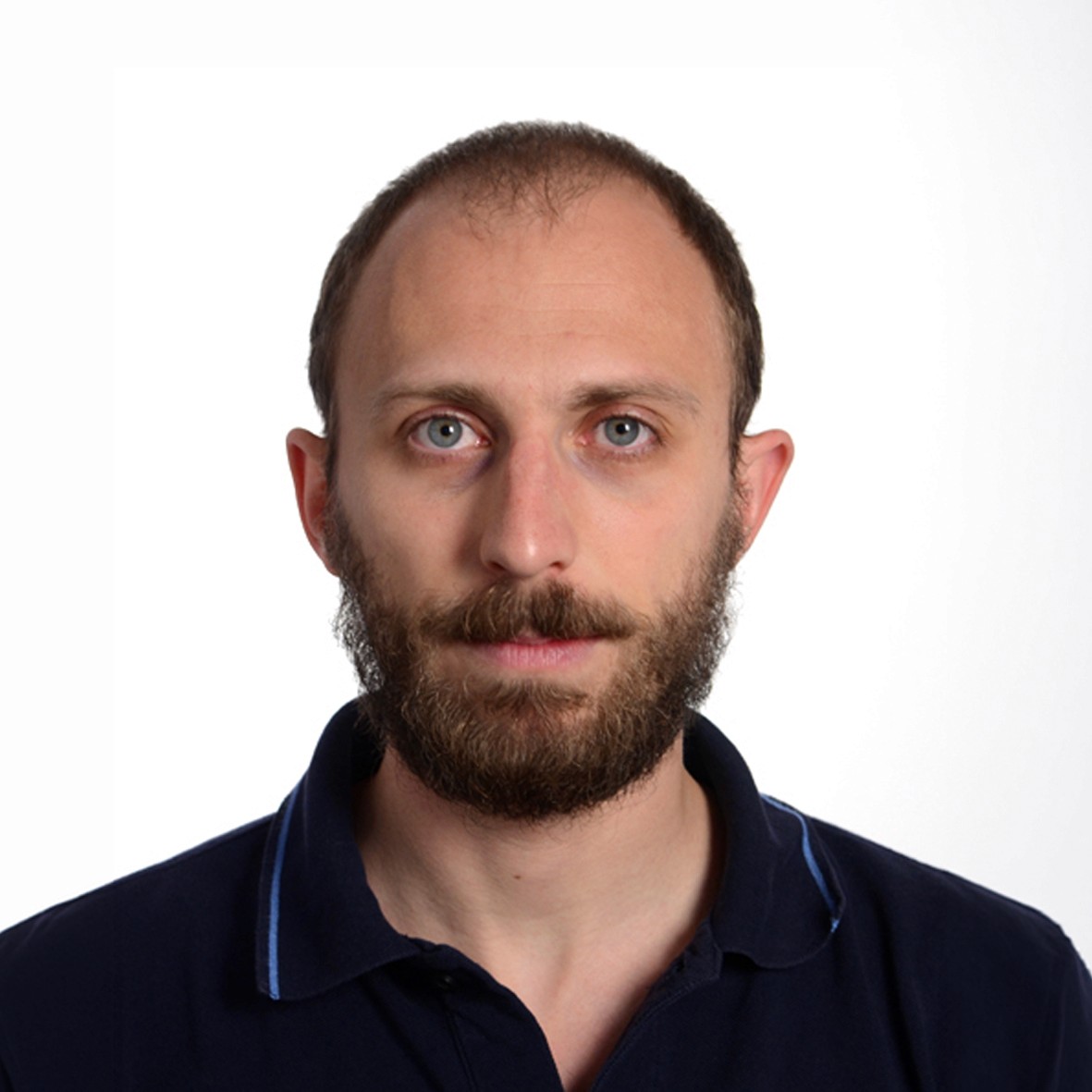
Paolo Frasca
CNRS Grenoble
“Graphons: a tool for the analysis of large networks of dynamical systems”
Abstract:
Graphons have emerged as a valuable tool to study large networks in multiple disciplines such as machine learning, signal processing, and control systems. Graphons are continuous limits of large graphs when the number of their nodes goes to infinity. Therefore, properties of the graphons can be informative about the properties of large-but-finite networks, and about the properties of dynamics that take place on large-but-finite networks. In this talk, I will show some examples of this approximation paradigm, including epidemic models and opinion dynamics.
Short Bio:
Paolo Frasca received the Ph.D. degree from Politecnico di Torino, Turin, Italy, in 2009. After post-doctoral appointments at IAC-CNR, Rome, and at Politecnico di Torino, Turin, he was an Assistant Professor at the University of Twente, Enschede, Netherlands, from 2013 to 2016. Since October 2016, he has been a CNRS Researcher at GIPSA-Lab, Grenoble, France, where, since 2021 he has been leading the Dynamics and Control of Networks (DANCE) group. His research interests include control systems and network science, with applications in transportation and social networks. Dr. Frasca has served (or is serving) as an Associate Editor for several conferences and journals, including the IEEE Transactions on Control of Network Systems, the IEEE Control Systems Letters, and Automatica.

Yasumasa Fujisaki
The University of Osaka
“Delay-Induced Stability-Switching Properties of Linear MAS with Directed Topologies”
Abstract:
This talk proposes the consensus properties of a linear multi -agent system in presence of a uniform delay and a directed interaction topology. The stability-switching behavior is considered, such that stability and instability of the system's modes alternate several times as the delay increases. First, the delay values causing imaginary roots of the characteristic equation are computed. The main result shows that the crossing direction of the imaginary axis is strictly related to the magnitude slope of the system's frequency response function. This result allows the depiction of a graph that contains explicitly the crossing direction information.
Short Bio:
Yasumasa Fujisaki (M’93) was born in Takatsuki, Osaka, Japan, in 1964. He received the B.S., M.S., and Ph.D. degrees in engineering from Kobe University, Kobe, Japan, in 1986, 1988, and 1994, respectively.,From 1988 to 1991, he was a Research Member of the Electronics Research Laboratory, Kobe Steel Ltd., Kobe. From 1991 to 2010, he was with Kobe University and served as a Research Associate and an Associate Professor. Since 2010, he has been a Professor of the Department of Information and Physical Sciences, Osaka University, Suita, Japan. He held a visiting academic appointment at IEIIT-CNR, Politecnico di Torino, Torino, Italy, from 2000 to 2001. His research interests include probabilistic methods for analysis and design of control systems, two-degree-of-freedom servosystems, and decentralized control of large-scale systems.,Prof. Fujisaki was an Associate Editor of Automatica from 2001 to 2012 and is currently an Editor of SICE Journal of Control, Measurement, and System Integration. He was a Director of the Society of Instrument and Control Engineers (SICE) from 2007 to 2008 and has been a Director of the Institute of Systems Control and Information Engineers (ISCIE) since 2012. He has been the Vice-Chair of IEEE CSS Kansai Chapter since 2014

Andrea Iannelli
University of Stuttgart
“Robust Adaptive Model Predictive Control for Tracking in Interconnected Systems via Distributed Optimization”
Abstract:
This talk presents a novel Distributed Robust Adaptive Model Predictive Control (DRAMPC) for tracking in multi-agent systems. The framework is designed to work with dynamically coupled subsystems and limited communication, which is restricted to local neighborhoods. The proposed approach explicitly accounts for parametric uncertainties and additive disturbances by employing a tube-based formulation to bound the system response for any possible uncertainty realizations. To ensure recursive feasibility and asymptotic stability, contractivity properties for the terminal cross-section are derived alongside a structured stabilizing gain for the closed-loop dynamics. The control problem is formulated by leveraging the Artificial Reference method for piecewise reference signals to ensure feasibility even when the desired reference is not directly reachable. The consensus ADMM algorithm is employed to solve the distributed optimization problem efficiently while maintaining scalability as the number of agents increases. Furthermore, the artificial reference formulation is extended to trajectory tracking, allowing the controller to track time-varying references while preserving feasibility. The effectiveness of the proposed method is demonstrated through illustrative examples, highlighting its capability to achieve accurate and robust tracking in multi-agent uncertain systems.
Short Bio:
Andrea Iannelli received the B.Sc. (2011) and M.Sc. (2014) degrees in Aerospace Engineering from the University of Pisa, Italy. During his master’s studies, he was a visiting researcher at San Diego State University (USA), contributing to the development of fluid–structure interaction solvers for the aeroelastic analysis of unconventional joined-wing aircraft configurations. He obtained his Ph.D. in Control and Dynamical Systems from the University of Bristol, United Kingdom, in April 2019, within the H2020 FLEXOP project, under the supervision of Dr. Andrés Marcos and Prof. Mark Lowenberg. From May 2019 to September 2022, he was a postdoctoral researcher at the Automatic Control Laboratory, ETH Zürich, Switzerland, in the group of Prof. Roy Smith.
Since October 2022, he has been a tenure-track Assistant Professor at the Institute for Systems Theory and Automatic Control (IST), University of Stuttgart, Germany, where he leads the Trustworthy Autonomy for Smart Adaptive Systems (TASAS) research group. His research focuses on control theory, optimization, and learning, with applications in energy systems, intelligent transportation, and robotics.
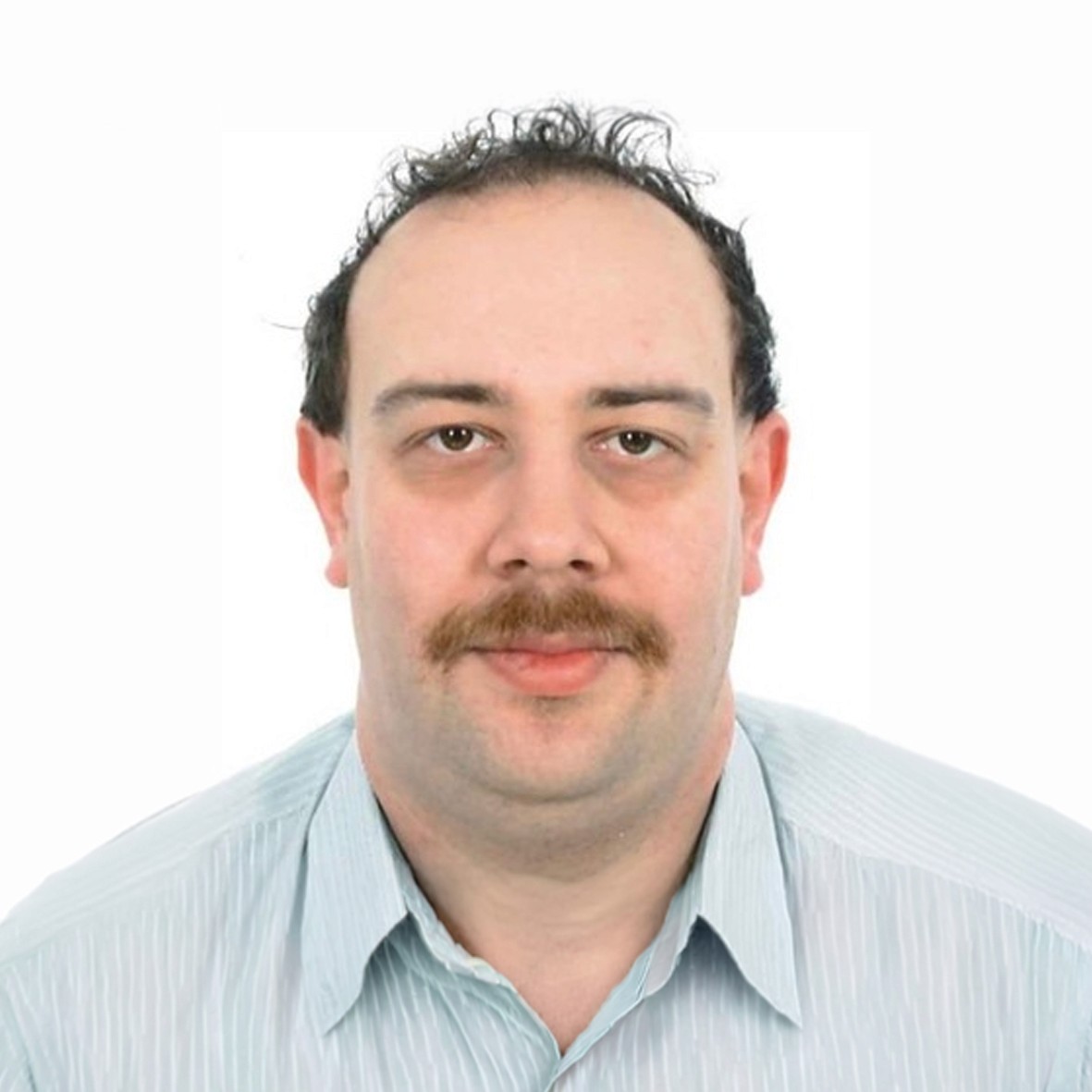
Anton Proskurnikov
Ploitecnico di Torino
“Passivity and Its Relaxations in Multi-Agent Coordination”
Abstract:
Many multi-agent coordination protocols suffer from unrealistic homogeneity assumptions, requiring that all agents be identical or reducible, in some manner, to identical dynamics. Passivity-based coordination, developed by M. Spong, M. Arcak, N. Chopra, R. Sepulchre, and others, offers a remarkable exception. This approach exploits the notion of passivity -- an elegant formalization of the energy dissipation principle introduced by the famous scientist Jan Willems. A key advantage of passivity-based synchronization is its modularity and robustness. Agents can be heterogeneous, nonlinear, and even uncertain in their dynamics, provided they satisfy passivity conditions. The feedback interconnection of passive systems remains passive, preventing unbounded energy growth across the network. Similarly, diffusive coupling among passive systems yields a network that converges to the minimum-energy surface, corresponding to global synchronization. In this talk, we review basic passivity criteria, in particular, the positive real lemmas. We consider the principles of passivity-based coordination in multi-agent systems and some recent extensions that relax the passivity requirement, replacing it, e.g., by feedback or feedforward passivity indices. This allows one to solve coordination problems for many agents that fail to be passive, e.g., linearized models of vehicles, biological oscillators, and discrete-time systems, which are almost never passive in the Willems sense.
Short Bio:
Anton Proskurnikov received his M.Sc. degree in 2003 and his Ph.D. degree in 2005, both from St. Petersburg State University, Russia. Currently he is an Associate Professor with the Department of Electronics and Telecommunications (DET), Polytechnic University of Turin, Italy. Previously he used to be an assistant professor and senior researcher at St. Petersburg State University (2003–2010), Russian Academy of Sciences (2006–2021), postdoctoral researcher at the University of Groningen (2014–2016) and Delft University of Technology (2016–2018). He is an associate editor at IEEE Transactions on Automatic Control, IFAC World Congresses 2023 and 2026, and EUCA Conference Board. He was the Program Committee Co-Chair of 7th International Conference on Event-based Control, Communication, and Signal Processing (EBCCSP 2021) and invited semi-plenary speaker to the IFAC World Congress 2017. His works have been awarded the Medal for Prominent Young Researchers of the Russian Academy of Sciences (2009), IFAC and Elsevier Paper Prize Award (2020) and O. Hugo Schuck Best Paper Award of the American Automatic Control Council (2023). His research interests are focused on dynamic complex networks, multi-agent systems and agent-based models in social sciences, economics and biology.

Federico Rossi
Jet Propulsion Laboratory
“Planning to replan - on observation processes in sequential decision-making”
Abstract:
We consider sequential decision-making problems where observations of state information are of high quality, but infrequently received. The setting is motivated by scenarios where multiple assets observe each other and communicate at pre-ordained times --- e.g., an overflying asset provides information to ground vehicles at agreed-upon times, or underwater vehicles surface and communicate in a synchronized manner.
In these problems, an autonomous decision-making algorithm needs to answer three questions: (i) when the agents should commit to a schedule of future observations, (ii) what the schedule of observations should be, and (iii) which action should be taken next (accounting for when the next observation will be received).We formalize this class of problem as “Markov Decision Problems with Actively Negotiated Schedule”, and treat the observation-generating process as a first-class citizen. We study variations of the observation-generating process that include observations that are entirely exogenous; are agreed-upon ahead of deployment; are replanned periodically; or are negotiated at the time of each observation.
We exploit this formulation to assess the value of knowing when future information will be available, as well as the value of committing to a schedule of future observations, as distinct quantities from the value of information itself. We conclude by speculating about stochasticity and latency in the observation process.
Short Bio:
Dr. Federico Rossi is a Robotics Technologist with the Multi-Agent Robotics Group (358P) within the Robotics section of NASA’s Jet Propulsion Laboratory. He received a Ph.D. in Aeronautics and Astronautics at Stanford University under the guidance of Prof. Marco Pavone in 2018 with a thesis On the Interaction between Autonomous Mobility-on-Demand Systems and the Built Environment: Models and Large Scale Coordination Algorithms. Prior to that, Federico received a dual M.Sc. in Space Engineering from Politecnico di Milano and Politecnico di Torino, Italy, in 2013. He is an alumn of the Alta Scuola Politecnica.
At JPL, Federico leads the multi-agent autonomy team for NASA’ Coordinated Autonomous Distributed Robotics Explorers (CADRE) mission, which will deliver a team of three autonomous rovers to the Moon’s Reiner Gamma region in 2026. Federico’s research focuses on decision-making under uncertainty in multi-agent robotic systems and operations of autonomous agents, with applications to planetary exploration and Earth science. At JPL, he has developed autonomy technologies for cooperative robotic exploration, joint orbit and observation optimization for exploration of small bodies, and under-ice navigation in Antarctica.
Prof. Maria Prandini
IFAC President-elect,
Politecnico di Milano
“Multi-agent optimization under uncertainty: probabilistic robustness in a data-based privacy preserving framework”
Abstract:
We consider multi-agent optimization problems over networks, where agents cooperate to reach agreement on a common decision or on the share of a common resource.
We investigate the setting where the environment within which agents operate is uncertain, each agent has access to a finite amount of data on the uncertain phenomenon, and these data constitute a private resource that is not to be exchanged or shared among agents. We provide a data driven framework to address these problems, and show how to accompany decisions in such a private-data regime with probabilistic certificates of robustness using tools from the so called scenario approach. Moreover, we discuss how such decisions can be computed in a distributed manner. To this end, we presented a general distributed architecture as a multi-agent information exchange mechanism, and illustrated it by outlining specific algorithms to solve decision and constraint couple optimization problems.
Short Bio:
Maria Prandini is currently full professor in Automatic Control at Politecnico di Milano, Italy.
She has been contributing to the activities of the IEEE Control Systems Society (CSS), the International Federation of Automatic Control (IFAC), and the Association for Computing Machinery (ACM) in different roles. She is currently IFAC President-elect. Previously, she was Vice-President for conference activities for IFAC (2020-23) and IEEE CSS (2016 and 2017), and a member of SIGBED Board of Directors (2019-21).
She was elected Fellow of the IEEE in 2020 and received the IEEE CSS Distinguished Member award in 2018. In 2017, she was August-Wilhelm Scheer Visiting Professor and Honorary fellow of the TUM Institute for Advanced Studied. She was conferred the title of Visiting Professor in Engineering at the University of Oxford for the triennia 2022-2025 and 2025-2028.
Her research interests include stochastic hybrid systems, distributed and data-driven optimization, federated learning in multi-agent systems, and the application of control theory to transportation and energy systems.
Keenan Albee
University of Southern California
“Autonomy On-Orbit and Beyond: Expanding Mission Capabilities in Extreme Environment Robotics”
Abstract:
Autonomy is essential to making rapid decisions in safety-critical situations and dealing with tasks too complex for a human teleoperator. Within the space robotics community, the confluence of enhanced processing power, algorithmic maturity, and growing acceptance of autonomy in risk-averse domains is leading to a renaissance in its use. This talk explores some of the enduring algorithmic and safety challenges of working with increasing complexity in space and extreme environment robotics autonomy; in particular, the problem of motion planning and control under uncertainty will be explored in the context of providing robot motion that is safe, real-time, and tailored to the needs of real robotic systems. This work is framed in the context of novel planning and control techniques in microgravity close proximity operations and planetary surface robotics, demonstrating, respectively, 1) planning, control, and state estimation for autonomous on-orbit rendezvous with an uncharacterized tumbling target; and 2) highly-constrained model predictive control for roving in unknown environments. Flight demonstrations of these techniques will be discussed for the Astrobee free-flyers aboard the International Space Station (ISS), and the Cooperative Autonomous Distributed Robotic Explorer (CADRE) rovers launching to the Moon.
Short Bio:
Keenan Albee is an Assistant Professor in the Department of Astronautical Engineering at the University of Southern California, with a courtesy appointment in Aerospace and Mechanical Engineering. He is the Principal Investigator of the Laboratory for Autonomous Systems in Exploration and Robotics (LASER), where he leads research on autonomous robotic systems for extreme and uncertain environments.
He received his Ph.D. in Aeronautics and Astronautics from the Massachusetts Institute of Technology in 2022, specializing in autonomous systems, with a minor in numerical methods. His doctoral research focused on online, information-aware motion planning and model improvement for uncertain mobile robotics. He also earned an S.M. in Aeronautics and Astronautics from MIT in 2019. He completed his undergraduate studies at Columbia University, where he received a B.S. in Mechanical Engineering in 2017, with minors in Computer Science and History.
From 2022 to 2025, he worked at NASA’s Jet Propulsion Laboratory as a Robotics Technologist in the Maritime and Multi-Agent Autonomy group. In this role, he served on the guidance, navigation, control, and autonomy teams for the CADRE lunar technology demonstration mission, developing and validating distributed multi-agent autonomy, real-time optimization-based motion planning, and coordination algorithms for fully autonomous lunar rovers. His work contributed to the first deployment of trajectory optimization techniques on another celestial body.
His research interests lie in autonomous robotics for extreme environments, planning and control under uncertainty, and multi-agent coordination. His work emphasizes safety-aware, resource-constrained autonomy and the integration of learning-based methods with optimal control and trajectory optimization, with applications spanning on-orbit servicing, planetary exploration, and advanced aerospace robotic systems. .
Giacomo Casadei
Universitè Grenoble Alpes
“Synchronization problems in networks of homogeneous and heterogeneous systems”
Abstract:
This presentation/module addresses the problem of synchronization in networks of dynamical systems, distinguishing between the case of homogeneous agents and that of heterogeneous agents, with particular emphasis on the role of control design and on the bounds that can be guaranteed on the synchronization error.
In the first part, the homogeneous case, where all systems share the same local dynamics, is analyzed. Synchronization is achieved through distributed control strategies based on Riccati theory, both in continuous-time and discrete-time settings. Stability conditions and convergence properties of the synchronization error are discussed, highlighting the relationship between the solution of the Riccati equation and the structure of the interconnection network.
The second part is devoted to the heterogeneous case, in which the nodes exhibit different dynamics. In an initial step, a solution based on the internal model principle is introduced, aimed at guaranteeing asymptotic synchronization despite the heterogeneity. Subsequently, a diffusive coupling, as the one designed for the homogeneous case, is considered: we analyze this setting in order to determine how much heterogeneity can be accepted while keeping the synchronization error bounded. This approach makes it possible to characterize a trade-off between control simplicity and performance in the presence of dynamical inequalities among the agents.
Short Bio:
Giacomo Casadei is an associate professor in Universitè Grenoble Alpes (IUT) and a member of team DANCE in GIPSA-Lab since 2024. He received the Master degree in Automation in 2012 and the Phd degree in Automation and Operative Research in 2016 at the University of Bologna, Italy. From 2016 to 2018, he has been postdoc in the NeCS team, a joint team of GIPSALab (CNRS) and INRIA. From 2018 to 2024, he has held an associate professor position in Ecole Centrale de Lyon. His research interests include modeling and control of networks, with a particular focus on synchronization of nonlinear systems and the use of nonlinear control techniques in networks.
Fabio Fagnani
Politecnico di Torino
“Networks and games: equilibrium analysis, strategic learning dynamics, intervention design, and formation models”
Abstract:
Many socio-technical systems involve large numbers of agents acting strategically and in a competitive way, their decisions being affected by those of the others through patterns of dependencies that reflect social, economic, or infrastructural network topologies. Network games have emerged as a powerful framework for the formal analysis of such interactions by providing a model for settings where a large number of agents interact with each other according to an underlying network represented by a graph. In this lecture, we will review the main concepts and results on network games, focusing on the structure of their equilibria, the behavior of strategic learning dynamics, and the design of interventions aimed at modifying their outcomes. We will also discuss some recent game-theoretic models of network formation.
Short Bio:
Fabio Fagnani got his Laurea degree in Mathematics from the University of Pisa and Scuola Normale Superiore of Pisa in 1986 and the PhD in Mathematics from the University of Groningen in 1991. He has been Assistant Professor of Mathematical Analysis at the Scuola Normale Superiore during 1991-1998, and in 1997 he held a Visiting Professor position at MIT. Since 1998 he is with the Politecnico of Torino where he is currently (since 2002) Full Professor of Mathematical Analysis. In the period 2012-2019, he has been the head of the Department of Mathematical Sciences of Politecnico di Torino. His current research interests are on the broad topic of dynamics and control over networks: opinion dynamics, inferential distributed algorithms, epidemic models, network games and learning dynamics in games, social and economic applications. He has published over 70 refereed papers on international journals and 60 over peer-reviewed conference proceedings.
In 2017 he was the recipient of the Petar Kokotovic distinguished professorship from the University of California at Santa Barbara (UCSB). In 2019-2020 he got a Leverhulme visiting professorship at Royal Holloway University of London.
Sophie Fosson
Politecnico di Torino
“Secure state estimation of cyber-physical systems under sparse attacks”
Abstract:
A cyber-physical system (CPS) is a multi-agent system in which agents interact with the physical world through sensors and actuators, and with one another through communication networks. Representative applications of CPSs include industrial control systems, smart power grids, wireless sensor networks, autonomous ground vehicles, and cooperative driving technologies. The distributed nature of CPSs presents both advantages and challenges from a security perspective. On the one hand, distribution enhances resilience to faults compared to centralized architectures. On the other hand, it increases exposure to adversarial actions, either through physical access to sensors or cyber access to communication networks.
As a result, substantial research effort has been devoted to CPS security. A prominent line of work focuses on secure state estimation in the presence of sensor attacks, where adversaries inject false data to manipulate system measurements. In realistic scenarios, such attacks are assumed to be unpredictable: no information is available about their dynamics, bounds, or probabilistic characteristics. The primary and widely accepted assumption is sparsity, meaning that only a limited number of sensors can be compromised, due to factors such as high system dimensionality, physical deployment constraints, and sensor heterogeneity.
In this talk, we review the main approaches and results in secure state estimation for CPSs under sparse sensor attacks. Assuming a linear time-invariant model, we investigate system observability and illustrate how sparsity can be leveraged to restore state reconstructability in the presence of compromised sensors.
Short Bio:
Sophie Fosson received the M.Sc. degree in applied mathematics from Politecnico di Torino, Turin, Italy, in 2005, and the Ph.D. degree in mathematics for industrial technologies from Scuola Normale Superiore di Pisa, Pisa, Italy, in 2011. From 2012 to 2016, she was a Postdoctoral Associate with the Department of Electronics and Telecommunications, Politecnico di Torino. During the same period, she made several research visits to the Centre Tecnològic de Telecomunicacions de Catalunya (CTTC), Barcelona, Spain. In 2017, she was a Researcher at Istituto Superiore Mario Boella, Turin, Italy.
She then joined the Department of Control and Computer Engineering, Politecnico di Torino, where she is currently an Associate Professor. Her research interests include sparse optimization, machine learning, system identification, control, and cyber-physical systems. She is an Associate Editor of IEEE Control Systems Letters.
Paolo Frasca
CNRS Grenoble
“Graphons: a tool for the analysis of large networks of dynamical systems”
Abstract:
Graphons have emerged as a valuable tool to study large networks in multiple disciplines such as machine learning, signal processing, and control systems. Graphons are continuous limits of large graphs when the number of their nodes goes to infinity. Therefore, properties of the graphons can be informative about the properties of large-but-finite networks, and about the properties of dynamics that take place on large-but-finite networks. In this talk, I will show some examples of this approximation paradigm, including epidemic models and opinion dynamics.
Short Bio:
Paolo Frasca received the Ph.D. degree from Politecnico di Torino, Turin, Italy, in 2009. After post-doctoral appointments at IAC-CNR, Rome, and at Politecnico di Torino, Turin, he was an Assistant Professor at the University of Twente, Enschede, Netherlands, from 2013 to 2016. Since October 2016, he has been a CNRS Researcher at GIPSA-Lab, Grenoble, France, where, since 2021 he has been leading the Dynamics and Control of Networks (DANCE) group. His research interests include control systems and network science, with applications in transportation and social networks. Dr. Frasca has served (or is serving) as an Associate Editor for several conferences and journals, including the IEEE Transactions on Control of Network Systems, the IEEE Control Systems Letters, and Automatica.
Yasumasa Fujisaki
The University of Osaka
“Delay-Induced Stability-Switching Properties of Linear MAS with Directed Topologies”
Abstract:
This talk proposes the consensus properties of a linear multi -agent system in presence of a uniform delay and a directed interaction topology. The stability-switching behavior is considered, such that stability and instability of the system's modes alternate several times as the delay increases. First, the delay values causing imaginary roots of the characteristic equation are computed. The main result shows that the crossing direction of the imaginary axis is strictly related to the magnitude slope of the system's frequency response function. This result allows the depiction of a graph that contains explicitly the crossing direction information.
Short Bio:
Yasumasa Fujisaki (M’93) was born in Takatsuki, Osaka, Japan, in 1964. He received the B.S., M.S., and Ph.D. degrees in engineering from Kobe University, Kobe, Japan, in 1986, 1988, and 1994, respectively.,From 1988 to 1991, he was a Research Member of the Electronics Research Laboratory, Kobe Steel Ltd., Kobe. From 1991 to 2010, he was with Kobe University and served as a Research Associate and an Associate Professor. Since 2010, he has been a Professor of the Department of Information and Physical Sciences, Osaka University, Suita, Japan. He held a visiting academic appointment at IEIIT-CNR, Politecnico di Torino, Torino, Italy, from 2000 to 2001. His research interests include probabilistic methods for analysis and design of control systems, two-degree-of-freedom servosystems, and decentralized control of large-scale systems.,Prof. Fujisaki was an Associate Editor of Automatica from 2001 to 2012 and is currently an Editor of SICE Journal of Control, Measurement, and System Integration. He was a Director of the Society of Instrument and Control Engineers (SICE) from 2007 to 2008 and has been a Director of the Institute of Systems Control and Information Engineers (ISCIE) since 2012. He has been the Vice-Chair of IEEE CSS Kansai Chapter since 2014
Andrea Iannelli
University of Stuttgart
“Robust Adaptive Model Predictive Control for Tracking in Interconnected Systems via Distributed Optimization”
Abstract:
This talk presents a novel Distributed Robust Adaptive Model Predictive Control (DRAMPC) for tracking in multi-agent systems. The framework is designed to work with dynamically coupled subsystems and limited communication, which is restricted to local neighborhoods. The proposed approach explicitly accounts for parametric uncertainties and additive disturbances by employing a tube-based formulation to bound the system response for any possible uncertainty realizations. To ensure recursive feasibility and asymptotic stability, contractivity properties for the terminal cross-section are derived alongside a structured stabilizing gain for the closed-loop dynamics. The control problem is formulated by leveraging the Artificial Reference method for piecewise reference signals to ensure feasibility even when the desired reference is not directly reachable. The consensus ADMM algorithm is employed to solve the distributed optimization problem efficiently while maintaining scalability as the number of agents increases. Furthermore, the artificial reference formulation is extended to trajectory tracking, allowing the controller to track time-varying references while preserving feasibility. The effectiveness of the proposed method is demonstrated through illustrative examples, highlighting its capability to achieve accurate and robust tracking in multi-agent uncertain systems.
Short Bio:
Andrea Iannelli received the B.Sc. (2011) and M.Sc. (2014) degrees in Aerospace Engineering from the University of Pisa, Italy. During his master’s studies, he was a visiting researcher at San Diego State University (USA), contributing to the development of fluid–structure interaction solvers for the aeroelastic analysis of unconventional joined-wing aircraft configurations. He obtained his Ph.D. in Control and Dynamical Systems from the University of Bristol, United Kingdom, in April 2019, within the H2020 FLEXOP project, under the supervision of Dr. Andrés Marcos and Prof. Mark Lowenberg. From May 2019 to September 2022, he was a postdoctoral researcher at the Automatic Control Laboratory, ETH Zürich, Switzerland, in the group of Prof. Roy Smith.
Since October 2022, he has been a tenure-track Assistant Professor at the Institute for Systems Theory and Automatic Control (IST), University of Stuttgart, Germany, where he leads the Trustworthy Autonomy for Smart Adaptive Systems (TASAS) research group. His research focuses on control theory, optimization, and learning, with applications in energy systems, intelligent transportation, and robotics.
Anton Proskurnikov
Ploitecnico di Torino
“Passivity and Its Relaxations in Multi-Agent Coordination”
Abstract:
Many multi-agent coordination protocols suffer from unrealistic homogeneity assumptions, requiring that all agents be identical or reducible, in some manner, to identical dynamics. Passivity-based coordination, developed by M. Spong, M. Arcak, N. Chopra, R. Sepulchre, and others, offers a remarkable exception. This approach exploits the notion of passivity -- an elegant formalization of the energy dissipation principle introduced by the famous scientist Jan Willems. A key advantage of passivity-based synchronization is its modularity and robustness. Agents can be heterogeneous, nonlinear, and even uncertain in their dynamics, provided they satisfy passivity conditions. The feedback interconnection of passive systems remains passive, preventing unbounded energy growth across the network. Similarly, diffusive coupling among passive systems yields a network that converges to the minimum-energy surface, corresponding to global synchronization. In this talk, we review basic passivity criteria, in particular, the positive real lemmas. We consider the principles of passivity-based coordination in multi-agent systems and some recent extensions that relax the passivity requirement, replacing it, e.g., by feedback or feedforward passivity indices. This allows one to solve coordination problems for many agents that fail to be passive, e.g., linearized models of vehicles, biological oscillators, and discrete-time systems, which are almost never passive in the Willems sense.
Short Bio:
Anton Proskurnikov received his M.Sc. degree in 2003 and his Ph.D. degree in 2005, both from St. Petersburg State University, Russia. Currently he is an Associate Professor with the Department of Electronics and Telecommunications (DET), Polytechnic University of Turin, Italy. Previously he used to be an assistant professor and senior researcher at St. Petersburg State University (2003–2010), Russian Academy of Sciences (2006–2021), postdoctoral researcher at the University of Groningen (2014–2016) and Delft University of Technology (2016–2018). He is an associate editor at IEEE Transactions on Automatic Control, IFAC World Congresses 2023 and 2026, and EUCA Conference Board. He was the Program Committee Co-Chair of 7th International Conference on Event-based Control, Communication, and Signal Processing (EBCCSP 2021) and invited semi-plenary speaker to the IFAC World Congress 2017. His works have been awarded the Medal for Prominent Young Researchers of the Russian Academy of Sciences (2009), IFAC and Elsevier Paper Prize Award (2020) and O. Hugo Schuck Best Paper Award of the American Automatic Control Council (2023). His research interests are focused on dynamic complex networks, multi-agent systems and agent-based models in social sciences, economics and biology.
Federico Rossi
Jet Propulsion Laboratory
“Planning to replan - on observation processes in sequential decision-making”
Abstract:
We consider sequential decision-making problems where observations of state information are of high quality, but infrequently received. The setting is motivated by scenarios where multiple assets observe each other and communicate at pre-ordained times --- e.g., an overflying asset provides information to ground vehicles at agreed-upon times, or underwater vehicles surface and communicate in a synchronized manner.
In these problems, an autonomous decision-making algorithm needs to answer three questions: (i) when the agents should commit to a schedule of future observations, (ii) what the schedule of observations should be, and (iii) which action should be taken next (accounting for when the next observation will be received).We formalize this class of problem as “Markov Decision Problems with Actively Negotiated Schedule”, and treat the observation-generating process as a first-class citizen. We study variations of the observation-generating process that include observations that are entirely exogenous; are agreed-upon ahead of deployment; are replanned periodically; or are negotiated at the time of each observation.
We exploit this formulation to assess the value of knowing when future information will be available, as well as the value of committing to a schedule of future observations, as distinct quantities from the value of information itself. We conclude by speculating about stochasticity and latency in the observation process.
Short Bio:
Dr. Federico Rossi is a Robotics Technologist with the Multi-Agent Robotics Group (358P) within the Robotics section of NASA’s Jet Propulsion Laboratory. He received a Ph.D. in Aeronautics and Astronautics at Stanford University under the guidance of Prof. Marco Pavone in 2018 with a thesis On the Interaction between Autonomous Mobility-on-Demand Systems and the Built Environment: Models and Large Scale Coordination Algorithms. Prior to that, Federico received a dual M.Sc. in Space Engineering from Politecnico di Milano and Politecnico di Torino, Italy, in 2013. He is an alumn of the Alta Scuola Politecnica.
At JPL, Federico leads the multi-agent autonomy team for NASA’ Coordinated Autonomous Distributed Robotics Explorers (CADRE) mission, which will deliver a team of three autonomous rovers to the Moon’s Reiner Gamma region in 2026. Federico’s research focuses on decision-making under uncertainty in multi-agent robotic systems and operations of autonomous agents, with applications to planetary exploration and Earth science. At JPL, he has developed autonomy technologies for cooperative robotic exploration, joint orbit and observation optimization for exploration of small bodies, and under-ice navigation in Antarctica.